You have been doing the things you were told to do. More vegetables, fewer drive-throughs. A multivitamin most mornings, when you remember it. A water bottle refilled at your desk. And still, a couple of hours after a perfectly good lunch, your stomach feels tight and heavy, your energy drains out like someone pulled a plug, and you catch yourself wondering why eating well seems to make so little difference.
Maybe you have mentioned it to someone. Maybe you were told it was stress, or getting older, or that everybody feels a little bloated now and then. Maybe you quietly decided this is simply how your body works now, and stopped expecting better.
Here is another way to look at it. What you eat is only half of the story. The other half is what your body actually takes in, and that part happens in a place most of us never think about until it stops cooperating.
It Is Not a Discipline Problem
When a plate of good food leaves you feeling worse instead of better, it is natural to turn the blame inward. You ate too fast. You chose the wrong thing. You just are not disciplined enough to feel good.
That kind of self-blame is exhausting, and it is usually aimed at the wrong target. Food does not become nourishment the moment you swallow it. It becomes nourishment when it crosses from your gut into your bloodstream, and everything about that crossing depends on the condition of the place where it happens.
Picture a garden. You can plant the best seeds money can buy, but what actually grows depends on the soil. Your gut is that soil. Throughout this month, we will call it the terrain.
Meet the Terrain
Your digestive tract is home to trillions of microorganisms, mostly bacteria along with some yeasts. Together they form a living community, and most of its members are on your side. Helpful bacteria break down parts of food you cannot digest alone, produce certain vitamins, and help keep the gut lining in good working order.
A smaller group are opportunists. In small numbers they are unremarkable. But when conditions shift, they can multiply and crowd out the helpful residents. Diets heavy in sugar and refined starch, long stretches of stress, and certain medications can all tilt the community in their favor.
None of this is a character flaw. It is ecology. The community in your gut responds to what it is given, the same way a lawn responds to rain, drought, or neglect.
Why Balance Decides What You Absorb
When the helpful organisms are in charge, the gut does its job quietly. Food is broken down, nutrients cross into circulation, and you rarely give it a thought.
When the balance tips, that process can become less efficient. Truehope puts it plainly: an imbalance of microflora, or an overgrowth of yeast and other unwanted organisms, can disrupt the absorption of nutrients. You can be eating well and still come up short where it matters, at the level of the cell.
The Gut and the Brain Are Talking
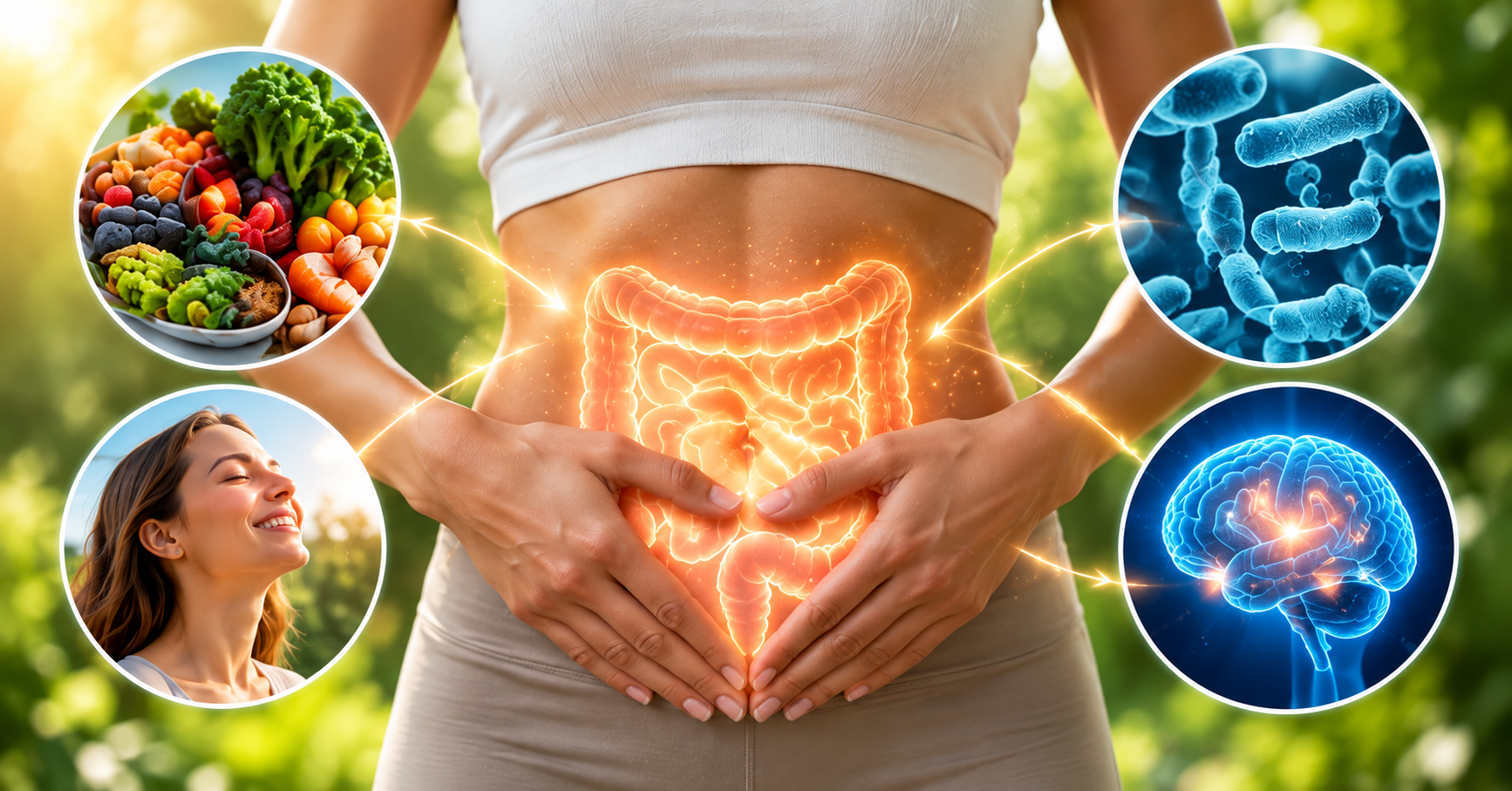
Here is where it gets personal. Your brain is one of the most nutrient-hungry organs you have, and it stays in constant conversation with your gut. The two are linked through the vagus nerve, a long communication line that carries signals in both directions, and most of that traffic flows from the gut up to the brain.
Your gut is also where most of the body’s serotonin is made, and where much of your immune system is located. So when the terrain is off, it rarely stays a stomach issue. It often travels with a head that feels off too: flat energy, foggy focus, a shorter fuse than you would like.
That is not weakness. It is biology asking for support.
Supporting the System
Tending the terrain takes two moves: making room, then replenishing. Truehope’s approach pairs a product with each.
Truehope OLE™ is a natural extract from the olive leaf. Olive leaves are rich in a polyphenol called oleuropein, and Truehope OLE is standardized to 17% oleuropein, so you get a consistent level of the compound in every capsule. It is designed to support immune function and healthy bowel function, and to help maintain healthy yeast balance by helping reduce excess yeast and other unwanted organisms. As a polyphenol, oleuropein also provides antioxidant support.
GreenBAC™ handles the replenishing side. It supplies eight essential digestive bacteria plus billions more beneficial bacteria, along with prebiotics, botanicals, algae, and enzymes, designed to maintain a healthy digestive system and support healthy bowel function.
Together they form Truehope’s Candida Protocol: OLE helps clear the ground, and GreenBAC helps restore the helpful residents, supporting the kind of balance that lets nutrients actually reach you.
Not sure where to start? The 3-minute Wellness Quiz can point you in the right direction, and every purchase includes free one-on-one support through the Truehope Program.
The Bottom Line
If eating well has not turned into feeling well, the problem may not be your food or your effort. It may be the terrain those nutrients have to cross. Supporting a balanced gut is one of the most foundational things you can do for how your body, and your mind, get nourished.
Over the rest of October, we will look at what happens when that balance tips, why adding good bacteria alone is not always enough, and how a supported gut helps carry you into the colder months.